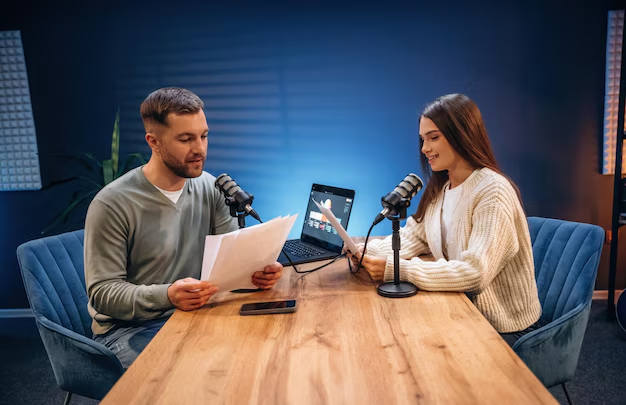


In podcasting, your voice is your stage — and sound is your storytelling tool.
Unlike video, podcast listeners can’t see your expressions or visuals. That means your words, tone, pacing, and audio design must carry the full emotional impact. Great storytelling keeps listeners engaged, builds loyalty, and turns casual listeners into subscribers.
Here’s how to master storytelling through sound.
🎯 1️⃣ Start With a Powerful Hook
The first 30–60 seconds decide everything.
Grab attention immediately with:
- A bold statement
- A surprising statistic
- A relatable problem
- A short teaser of what’s coming
Example:
“Last year, I almost quit podcasting — until one small change doubled my downloads.”
Curiosity keeps listeners from pressing pause.
🧱 2️⃣ Structure Your Story Clearly
Every engaging episode follows a structure.
Use this simple framework:
Hook → Context → Conflict/Problem → Solution/Insight → Takeaway → Call to Action
Even interview podcasts benefit from structure. Guide the conversation so it flows naturally rather than jumping randomly between topics.
Structure reduces confusion and improves listener retention.
🎭 3️⃣ Use Vocal Variety and Emotion
Monotone delivery kills engagement.
Instead:
- Change your pace (slow for impact, fast for excitement)
- Emphasize key words
- Pause for dramatic effect
- Adjust tone based on emotion
Smiling while speaking can actually make your voice sound warmer.
Your voice should match the feeling of the story.
⏸️ 4️⃣ Master the Power of Silence
Silence is powerful.
Short pauses:
- Build suspense
- Highlight important points
- Give listeners time to process
Don’t rush through impactful moments. Let them breathe.
🎧 5️⃣ Add Music and Sound Design Strategically
Music enhances emotional depth when used correctly.
You can add:
- Intro and outro themes
- Background music during storytelling
- Soft transitions between segments
- Light sound effects for emphasis
But don’t overdo it. Sound should enhance — not distract.
🧩 6️⃣ Paint Pictures With Words
Since listeners can’t see visuals, you must describe scenes clearly.
Instead of saying:
“It was a stressful day.”
Try:
“My phone wouldn’t stop buzzing, deadlines were piling up, and I hadn’t even finished my first cup of coffee.”
Descriptive storytelling creates immersion.
👥 7️⃣ Make It Personal and Relatable
People connect with stories, not lectures.
Share:
- Personal experiences
- Lessons learned
- Failures and growth moments
- Real-world examples
Authenticity builds trust. Vulnerability builds loyalty.
🎙️ 8️⃣ Control Audio Quality for Better Story Impact
Even the best story loses power with poor sound quality.
Ensure:
✔ Clear voice recording
✔ Balanced volume levels
✔ Minimal background noise
✔ Smooth transitions
Clean audio helps listeners focus on the message rather than distractions.
🔄 9️⃣ Use Callbacks and Story Loops
A storytelling trick used in movies and books is the “open loop.”
Mention something early in the episode, then return to it later.
Example:
“Remember that moment when I almost quit? Here’s what changed everything…”
This keeps listeners curious and engaged until the end.
🎯 🔟 End With a Strong Takeaway
Never end abruptly.
Close your episode with:
- A clear lesson
- Actionable advice
- A thought-provoking question
- A compelling call to action
Leave your audience feeling inspired, informed, or motivated.
🚀 Final Thoughts
Podcast storytelling is more than talking into a microphone — it’s about creating an emotional journey through sound.
When you combine:
✔ Strong structure
✔ Vocal emotion
✔ Smart pacing
✔ Strategic sound design
✔ Professional audio quality