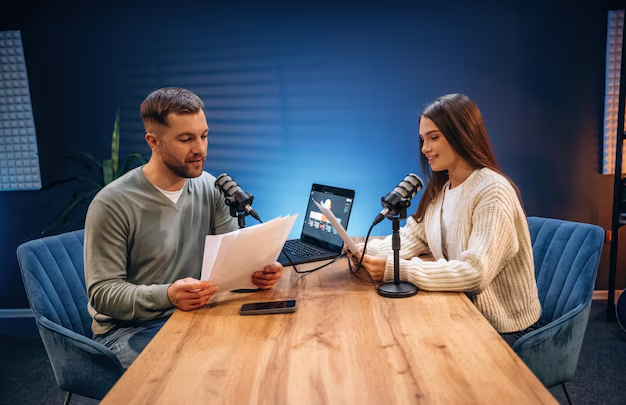


Turning a simple idea into a polished podcast episode requires more than just hitting “record.” A clear workflow helps you stay organized, save time, and consistently produce high-quality content your audience loves.
Whether you’re recording at home or in a professional studio, this step-by-step guide will take you from concept to publication smoothly.
💡 Step 1: Brainstorm & Validate Your Idea
Every great episode starts with a strong idea.
Ask yourself:
- What problem am I solving?
- Who is this episode for?
- Why would someone click on this title?
Check:
- Audience questions
- Trending topics in your niche
- Comments from previous episodes
- Social media discussions
Tip: Keep a running list of episode ideas so you’re never stuck.
🧠 Step 2: Define the Episode Goal
Before outlining, be clear about your objective.
Is this episode meant to:
- Educate?
- Inspire?
- Entertain?
- Promote something?
Clarity ensures your message stays focused.
📝 Step 3: Outline or Script the Episode
You don’t need a full script (unless it’s storytelling-heavy), but you do need structure.
Simple outline format:
1. Hook (30–60 seconds)
Grab attention immediately.
2. Introduction
Introduce yourself and the episode topic.
3. Main Points (2–5 key sections)
Break content into clear segments.
4. Summary
Reinforce the main takeaway.
5. Call to Action (CTA)
Subscribe, follow, book, download, etc.
Planning reduces editing time and eliminates rambling.
🎤 Step 4: Prepare for Recording
Before recording:
✔ Test microphone levels
✔ Check background noise
✔ Silence phones and notifications
✔ Warm up your voice
✔ Keep water nearby
If recording interviews:
- Share questions with guests in advance
- Confirm internet connection
- Record backup audio if possible
Preparation prevents technical stress.
🎧 Step 5: Record the Episode
During recording:
- Speak naturally and confidently
- Maintain consistent mic distance
- Smile while talking (it improves tone)
- Pause instead of restarting if you make a mistake
Professional studios often record separate tracks for each speaker, which makes editing easier.
✂️ Step 6: Edit & Clean Up
Editing transforms raw audio into polished content.
Remove:
- Long pauses
- Background noise
- Repeated words
- Filler words (um, uh)
Enhance with:
- Light compression
- Equalization (EQ)
- Volume leveling
- Intro/outro music
Keep edits natural — over-editing can make audio sound robotic.
🎚️ Step 7: Mix & Master
Mixing ensures balance between:
- Voices
- Music
- Sound effects
Mastering ensures:
- Consistent volume
- Platform-ready audio levels
- Clear playback on all devices
This step gives your episode a professional finish.
🖼️ Step 8: Create Supporting Assets
Before publishing, prepare:
- Episode title (clear & compelling)
- Episode description
- Show notes
- Keywords for SEO
- Social media captions
- Audiograms or short clips
Strong titles improve click-through rates significantly.
🚀 Step 9: Publish & Distribute
Upload your episode to your podcast hosting platform.
Ensure:
✔ Correct file format (usually MP3)
✔ Optimized file size
✔ Proper tags & categories
✔ Attractive episode artwork
Your host will distribute the episode to platforms like Spotify, Apple Podcasts, and others.
📢 Step 10: Promote & Repurpose
Publishing is just the beginning.
Promote your episode through:
- Short video clips
- Instagram Reels
- YouTube Shorts
- LinkedIn posts
- Email newsletters
Repurpose content into:
- Blog posts
- Quote graphics
- Twitter threads
- Carousel posts
Promotion drives growth.
📊 Step 11: Analyze & Improve
After publishing, monitor:
- Downloads
- Listener retention
- Popular segments
- Audience feedback
Identify patterns:
- Which topics perform best?
- Where do listeners drop off?
- Which format works better?
Refine your future episodes accordingly.
🎯 Complete Workflow Overview
Idea → Goal → Outline → Prepare → Record → Edit → Mix → Publish → Promote → Analyze
Following a structured workflow:
✔ Saves time
✔ Improves quality
✔ Reduces stress
✔ Builds consistency
✔ Helps scale your podcast