
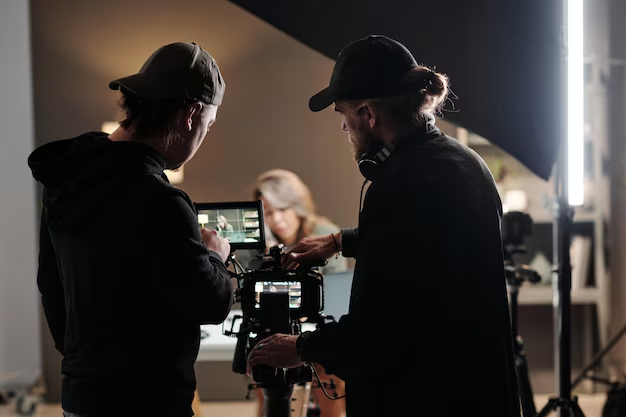
Have you ever wondered what really happens inside a professional podcast studio?
Many creators think recording is simply “press record and talk.” In reality, a professional recording session is a carefully managed process designed to produce crystal-clear, broadcast-ready audio while allowing you to focus entirely on your message.
Here’s a complete behind-the-scenes look at what happens during a professional recording session.
🎛️ 1️⃣ Pre-Session Preparation
Before you even step in front of the microphone, preparation begins.
Studio Setup Includes:
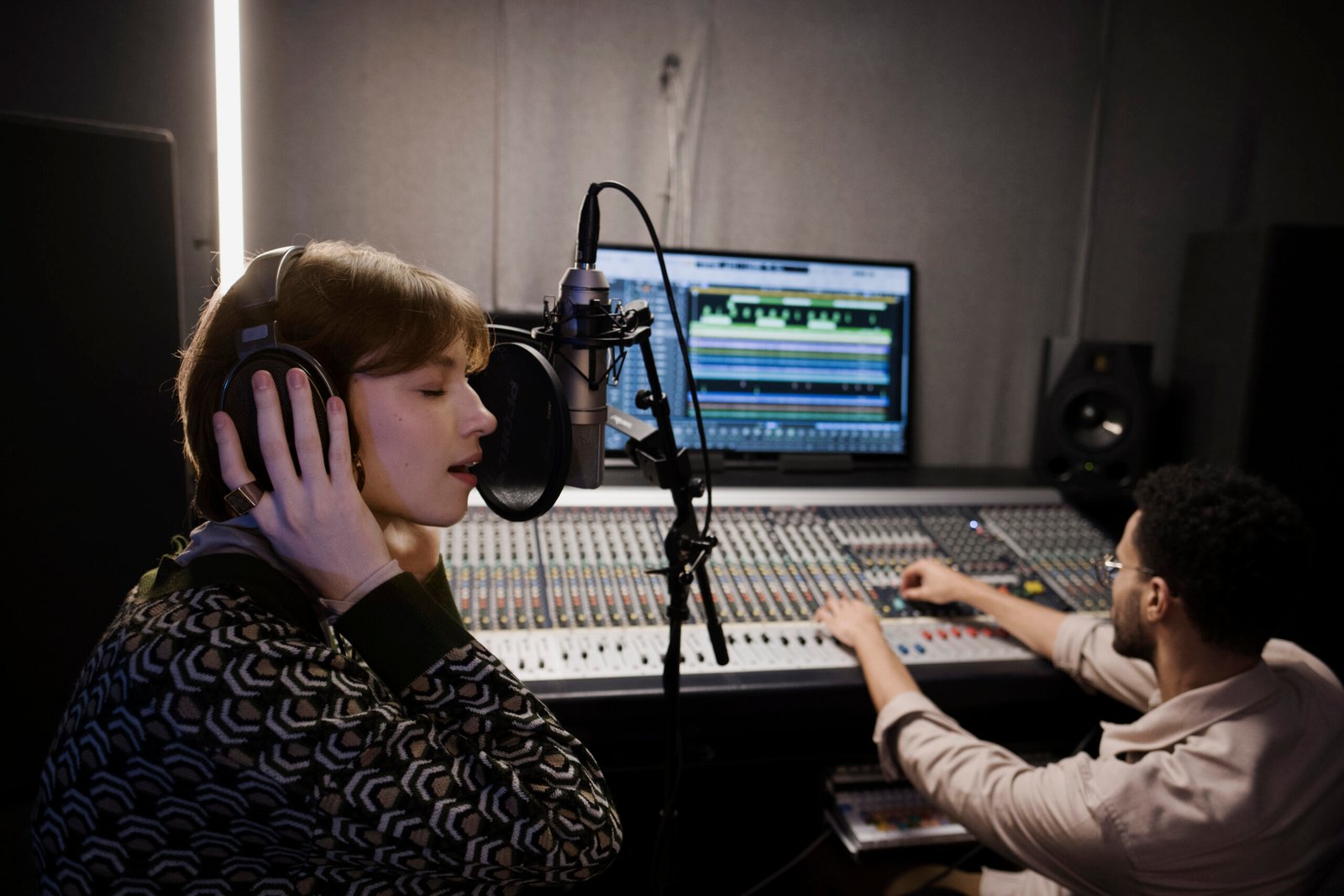
- Microphone selection based on your voice tone
- Adjusting mic height and positioning
- Setting pop filters
- Testing audio levels
- Checking cables and interfaces
Professional studios use acoustically treated rooms to eliminate echo and unwanted reflections. This ensures clean, natural sound from the start.
🎤 2️⃣ Microphone & Sound Check
Next comes the sound check.
You’ll be asked to:
- Speak at your normal recording volume
- Test louder and softer tones
- Try a few sample lines
The sound engineer adjusts:
- Gain levels
- EQ settings
- Headphone mix
- Background noise levels
This step prevents distortion, clipping, or low-volume issues later.
🎧 3️⃣ Headphone Monitoring
You’ll wear closed-back headphones so you can:
- Hear your own voice clearly
- Avoid mic bleed
- Maintain consistent tone
Engineers monitor your voice in real-time to ensure everything sounds smooth and balanced.
🎬 4️⃣ The Recording Process
Now comes the main event — recording.
During the session:
- Engineers monitor sound levels continuously
- Mistakes can be marked for easy editing
- Multiple takes may be recorded
- Background noise is controlled
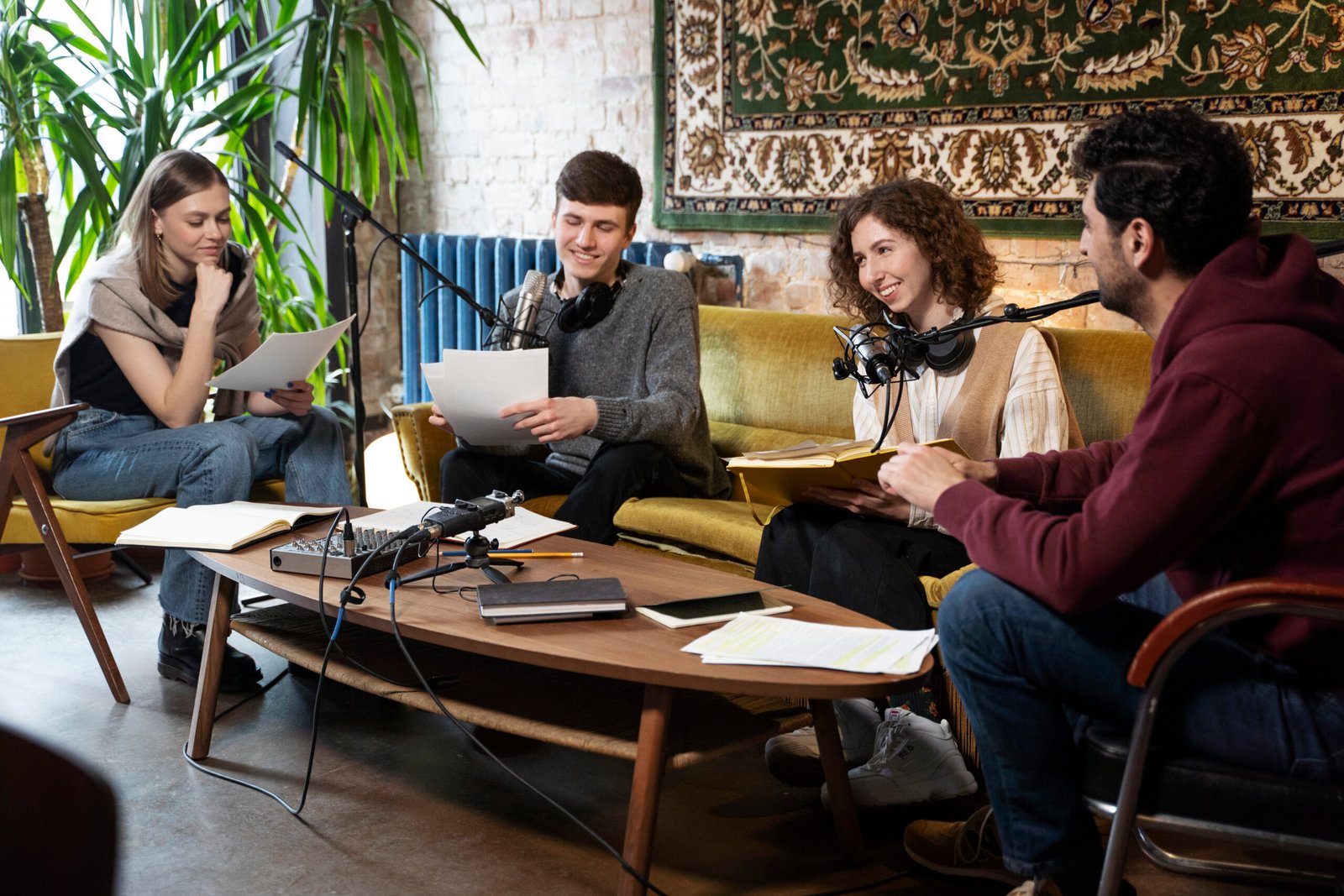
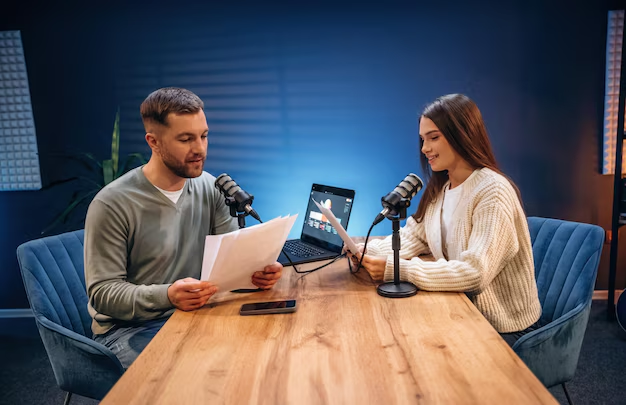
If you’re recording interviews:
- Each person may get a separate mic
- Audio is recorded on separate tracks
- Cross-talk is minimized
You focus on delivering your content — the technical side is handled professionally.
✂️ 5️⃣ Editing & Cleanup
Once recording is complete, post-production begins.
Editing includes:
- Removing mistakes
- Cutting long pauses
- Eliminating background noise
- Reducing filler words
- Balancing volume levels
Professional editing transforms raw audio into smooth, engaging content.
🎚️ 6️⃣ Mixing & Mastering
This is where your podcast truly becomes “studio quality.”
Engineers apply:
- Equalization (EQ)
- Compression
- Noise reduction
- Limiting
- Audio normalization
The goal is to create a polished, consistent sound that works perfectly across all platforms — Spotify, Apple Podcasts, YouTube, and more.
📦 7️⃣ Exporting & Delivery
Finally, your episode is:
- Exported in the correct format (MP3/WAV)
- Optimized for streaming
- Delivered ready for publishing
Some studios even help with:
- Uploading to hosting platforms
- Adding intro/outro music
- Creating short promo clips
🎯 Why a Professional Recording Session Makes a Difference
Compared to home setups, professional sessions offer:
✔ Acoustic treatment
✔ High-end microphones
✔ Expert sound engineering
✔ Time-saving workflow
✔ Stress-free recording
✔ Broadcast-ready quality
When listeners hear clear, balanced audio, they stay longer, trust more, and take your content seriously.
🚀 Final Thoughts
A professional recording session isn’t just about better equipment — it’s about expertise, environment, and experience.